
INTRODUCTION
One of the biggest challenges of every online business , bloggers and online entrepreneurs is getting consistent traffic , they struggle with this on daily basis. Putting out content is no longer enough when there are millions of website seeking attention just like yours . You need to stand out and to achieve this , you need a smart content marketing strategy that attracts visitors , build trust and keep readers coming back to your website or business
Why Content Marketing ? This is because it is one of the effective ways to drive organic and quality traffic to your website without relying on paid ads. When you create a helpful or valuable optimized content , you can improve your search rankings , engage your audience and increase your conversions over time .
If you are not using this method known as content marketing to drive traffic , then you are leaving massive growth on the table . I believe that when you are through reading this post , you will begin to see the need to start using smart content marketing to grow organic traffic and increase your conversions
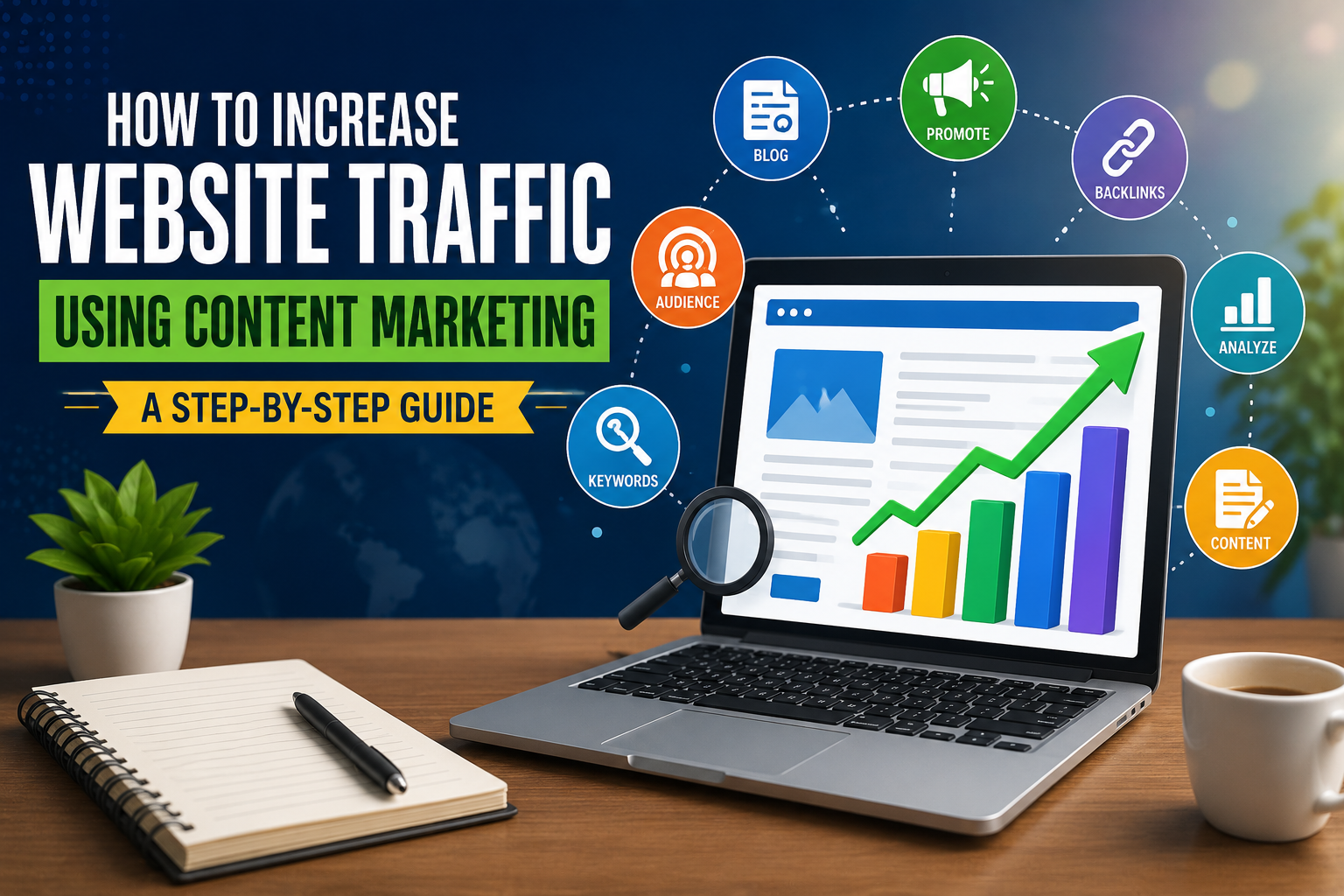
In this guide, you’ll learn how to increase website traffic using content marketing step by step.
WHAT IS CONTENT MARKETING ?
Content Marketing is the process that involves creating and sharing useful contents on your website with the aim of engaging a target audience . These contents can include blog posts,Videos,Infographics,etc . These contents provide useful information that solves problems to your audience .
If you desire to see a positive ROI , you need to prioritize blogging which is one of the most effective content marketing strategies..

Whether you’re running a small business, or scaling a startup, content marketing is one of the ways to attract qualified traffic and grow your business . You also need to understand that it is not just about publishing Blog posts and expect an organic traffic , but a step -by -step strategy that aligns with your audience, your goals, and the platforms that matters.
WHY CONTENT MARKETING MATTERS FOR WEBSITE TRAFFIC
Useful and high quality contents on websites are always rewarded by Google , hence Google ranks websites with useful and high quality Contents . You need to create more valuable content so as to increase its possibility to be ranked higher in search results.
When your website is ranked higher in seach results, you will start getting organic traffic to your website without the need for running paid ads . This then will result to conversions and sales
BENEFITS OF CONTENT MARKETING
- Increased organic traffic
- Better search engine rankings
- More brand authority
- Higher customer engagement
- Long-term online visibility
STEPS TO INCREASE YOUR WEBSITE TRAFFIC
Increasing your website traffic using content markeing requires a clear steps or strategies that aligns with your audience, your goals, and the platforms that matter. Let us look at the steps
Step 1: Identify and Understand Your Audience
This is the first thing you need to do because you can increase website traffic using content marketing when you do not know who your target audience are .
You need to ask questions like
- What problems are they trying to solve?
- What keywords are they searching for?
- What type of content do they enjoy?
- Which platforms do they use most?

Creating audience personas can help you better understand your ideal readers and create contents that attracts the right visitors. When your blog post feels like it was made just for them, your audience is far more likely to click, read, and share.You can use tools like Google analytics , social media insights and customer surveys to back up your instincts with real data
Step 2: Conduct Keyword Research
After identifying and understanding your audience, the next thing is to figure out what they are actively searching for .Keywords are the phrases people type into search engines when looking for information.
Targeting these keyword in your website article or blog post increases your website chances of being ranked in search results which leads to being discovered by the right people . You can use tools like Google keyword planner , Ubersuggest , SEMrush or Ahrefs etc to conduct a keyword research
When conducting keyword research , focus on high volume and long -tail keyword – these are usually easier to rank for . For example, instead of just “content marketing ,” you might target “best content marketing strategies newbie bloggers .” instead of targeting a broad keyword like “marketing,” target specific long-tail keywords such as “how to increase website traffic with content marketing.”
Bear in mind that Your content should reflect the mindset of your audience at every stage of the journey.
Step 3: Develop a Content Strategy
This is a critical part of mastering how to increase website traffic using content marketing . You need to decide what type of content resonates or aligns with your audience . These are types of contents that are proven to build traffic
- Blog posts
- Videos
- Podcasts
- Downloadable etc
Blog posts are ideal for SEO , educational content and thought leadership , Videos are great for tutorials , product demos etc, Podcasts are ideal for building trust and deeper connections while downloadables like pdf guides , checklists , etc are ideal for lead magnets to build email list
From there, build out a content calendar that outlines what you’ll publish, when, and where you’ll promote it. Remember to stay consistent because it is the key for building audience trust
Let every content you create have an objective either to educate , rank for a keyword , generate leads or all the three
Step 4: Create High-Quality, Helpful and Valuable Content
High-quality , helpful and valuable content is the foundation of successful content marketing. Your articles should be informative, easy to read, and optimized for SEO.
High-quality content means more than correct grammar and polished visuals. It means creating something genuinely useful. Content that answers real questions, solves specific problems
Remember that your audience do not need vague tips- they need practical insights they can act on . This means that you need to break down complex topics into simpler terms , you also need to provide original research or share personal experience that builds credibility
Here are some tips for writing effective blog posts:
- Use engaging Headlines- attention grabbing headlines that include your keyword is a good practice . Readers willdecide within seconds whether to click on your content or not
- Include your keyword naturally title , headlines, meta description, URL, image alt text,Avoid keyword stuffing, as it can hurt readability and rankings.
- Use short paragraphs, bullet points , subheadings, images and visuals as this makes your content easier to scan and more engaging to your audience
The more you format your content for readability—using headers, visuals, and strong intros—the longer people stay on the page. And the longer they stay, the stronger the signal to Google that your content is worth ranking.
Step 5: Optimize Content for SEO
To get your best content seen by your audience , you need Search engine Optimization , it is a must if you want to master how to increase website traffic using content marketing .
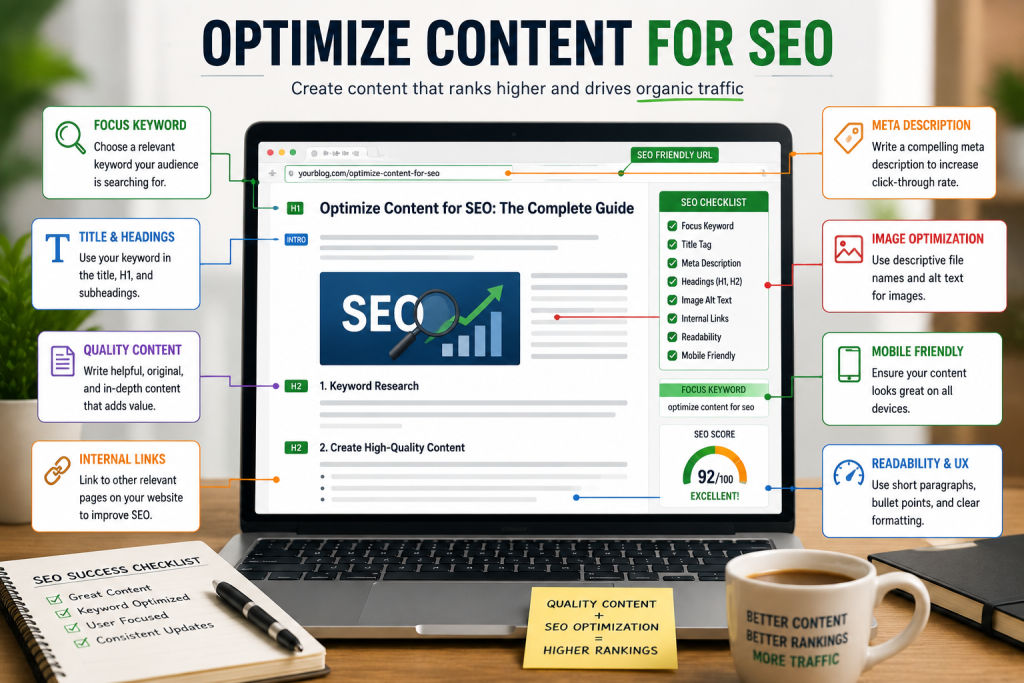
Start by optimizing your content around the keywords you are targeting . You need to naturally include them in the headlines, first paragraph , meta description and URL . You can structure your content with clear headers like HI, H2, H3, H4 . Remember to also add link to related articles in your content , use alt text ( YOUR KEYWORD) for all images . These practices is what Search Engine Optimization is all about .
They help search engines understand what your content is about—and how it fits into your broader site structure. Ensure your website loads faster so that you will not lose traffic , this is because visitors love fast loading websites and are likely to return back to the website . You must also ensure that your website is mobile responsive – which implies been viewed on mobile phones
Step 6: Promote Your Content
To increase website traffic using content marketing , you need to place that content in front of millions of people , this is where social media platforms comes into play . Join different facebook groups that focuses on what your content is all about . For example if your website is on health and fitness, you then need to join many facebook groups that discusses about health and fitness .
Joining these groups gives you the opportunity to promote your content to the right audience ( you should also keep to the group’s rules to avoid being banned)
If you do not want to join Facebook groups, you can start with your owned channels ,. Share your content through your email list . If you’ve built a following, these are the people most likely to engage, share, and amplify your reach.
You can also do guest blogging on relevant websites , build relationships with influencers who can share your content with their audiences . When you have many backlinks from different trusted sites, Google sees them as a signal of trust and authority , this in turn makes your website rank higher in search results.
Don’t overlook paid channels also , a small investment in boosting your content on platforms like linkedln, facebook etc can help you reach a wider audience
Step 7: Utilize Email Marketing
Email marketing is one of the most powerful tools in your content marketing toolkit. The essence of email marketing is to keep your audience coming back to your website . You create a content , you send an email to your subscribers informing them of the new content and what they will gain by reading . This will inspire them to vivit your content .
Here’s how to use email marketing to support your content efforts:
- Encourage blog readers to subscribe for updates or exclusive content
- Use lead magnets like guides or checklists to grow your list
- Send regular newsletters that highlight recent blog posts or upcoming events
- Segment your audience so content is personalized and relevant
The beauty of email is that it gives you just direct access to an audience that’s already interested in what you have to say.
Step 8: Analyze and Improve Performance
Content Marketing is an ongoing process of testing , learning and optimizing . You need to Track your results or performance and adjust based on what the data tells you. ,
Look out for contents getting the most traffic and engagement , look at page views , time on page , bounce rates and conversion rates and iprove more on what is working
You should also check out the source of your traffic – are visitors finding you through search engines, social media, email, or referrals? Knowing your traffic source helps you refine your promotion strategy .
You should also be willing to move with trends and changes in algorithms . The websites or brands that suceed in the long run are the ones that improves their strategy consistently in other to stay effective
CONCLUSION
Content marketing remains one of the best long-term strategies for increasing website traffic. By understanding your audience, targeting the right keywords, publishing valuable content, and promoting it effectively, you can attract more visitors and grow your online presence.
Success doesn’t happen overnight, but with consistency and a smart SEO strategy, your website can steadily gain traffic, authority, and loyal readers. Start implementing these content marketing steps today and watch your website grow over time.
Hope this helps, thanks for your time and success in your content marketing Journey
About Author
